Philadelphia Eagles vs Minnesota Vikings Match Player Stats
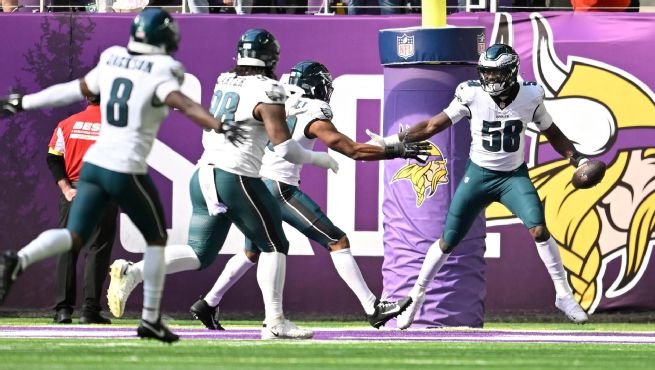
The recent clash between the Philadelphia Eagles vs Minnesota Vikings Match Player Stats was one of the most highly anticipated games of the NFL season. Both teams came into the matchup with strong rosters, dynamic offensive strategies, and formidable defenses. This article provides an in-depth look at the player statistics, analyzing performances that influenced the outcome of the game.
Quarterback Performance
The quarterback battle was a central storyline of this matchup. Jalen Hurts, the Eagles’ quarterback, showcased his dual-threat ability, combining efficient passing with effective rushing yards. Hurts completed a notable percentage of his passes, demonstrating excellent accuracy on short and mid-range throws. His ability to escape pressure and extend plays was critical for Philadelphia, contributing to several key scoring drives.
On the Vikings’ side, Kirk Cousins led the offense with a strong passing display, relying heavily on his veteran receivers to create separation downfield. Cousins completed a significant number of passes, with multiple completions going for substantial yardage. However, the Eagles’ defensive line created pressure at crucial moments, resulting in a few sacks and hurried throws.
Running Back Contributions
Philadelphia’s rushing attack was spearheaded by Miles Sanders, who found gaps in the Vikings’ defensive front and contributed both on the ground and in the passing game. Sanders’ combination of speed and vision allowed him to break through tackles, gaining important first downs.
For Minnesota, Dalvin Cook was the focal point of their rushing offense. Cook exhibited his trademark balance and agility, frequently forcing defenders to miss tackles. Despite facing a strong Eagles defensive front, Cook managed to record significant yardage, keeping the Vikings’ drive alive in multiple instances. Both running backs’ performances demonstrated the critical role of the rushing game in maintaining offensive momentum.
Wide Receivers and Passing Targets
The Eagles’ wide receiver corps played a pivotal role in stretching the field. A.J. Brown stood out with his ability to create separation, using precise route running and speed to gain yardage after the catch. DeVonta Smith complemented Brown by consistently finding soft spots in the Vikings’ coverage. Their combined contributions allowed Hurts to distribute the ball effectively, keeping the defense off balance.
Minnesota’s receiving options, led by Justin Jefferson, were equally impressive. Jefferson’s speed, hands, and route-running ability made him a constant threat. He accumulated significant yardage and secured multiple first downs, often turning short completions into explosive plays. Adam Thielen added veteran experience, finding openings in the Eagles’ secondary and helping Cousins maintain offensive rhythm.
Tight End Impact
Tight ends were essential for both teams, particularly in third-down situations and red-zone scenarios. Philadelphia’s Dallas Goedert displayed strong blocking and route-running skills, making himself a reliable target for Hurts. His contributions helped the Eagles sustain drives and convert crucial third downs.
Minnesota’s T.J. Hockenson also made his presence felt, catching important passes and providing stability to the Vikings’ offensive schemes. Both tight ends demonstrated versatility, impacting both the passing and running game and influencing defensive adjustments.
Defensive Standouts
Philadelphia’s defense was anchored by Fletcher Cox and Darius Slay, who consistently pressured Cousins and limited big-play opportunities. Cox’s ability to collapse the pocket disrupted the Vikings’ passing rhythm, while Slay’s coverage skills reduced yardage after catches and forced several incompletions.
Minnesota’s defensive unit, led by Danielle Hunter, applied consistent pressure on Hurts and the Eagles’ offensive line. Hunter’s speed and technique resulted in multiple quarterback hits and forced hurried throws, demonstrating the Vikings’ ability to challenge even an efficient offense.
Special Teams and Kick Contributions
Special teams also played a significant role in the game. Philadelphia’s kicker, Jake Elliott, contributed by converting field goals from mid-range and ensuring points on drives that stalled. The Vikings’ kicker, Greg Joseph, was similarly reliable, converting key field goals that kept Minnesota competitive. Punting units and kickoff coverage impacted field position, influencing offensive strategies throughout the game.
Turnovers and Ball Security
Turnovers often determine the outcome of tightly contested games. Philadelphia managed to protect the football effectively, with minimal interceptions or fumbles. Hurts and his offensive unit maintained composure, converting critical third downs and sustaining drives.
Minnesota, however, experienced a couple of costly turnovers. Interceptions thrown under pressure and fumbles during runs limited their scoring opportunities. The Eagles capitalized on these mistakes, highlighting the importance of ball security and situational awareness in high-stakes matchups.
Team Statistics Overview
Overall, the Eagles and Vikings displayed contrasting styles. Philadelphia leaned on a balanced offensive approach, mixing effective passing with timely rushing contributions. Minnesota emphasized their aerial attack, seeking to exploit matchups and generate explosive plays. Both defenses were opportunistic, with key players creating turnovers and pressuring quarterbacks at pivotal moments.
From a statistical standpoint, the Eagles had an edge in total yardage, primarily due to effective third-down conversions and sustained drives. The Vikings excelled in explosive plays, with several long completions and breakaway runs. Time of possession favored Philadelphia slightly, reflecting their ability to maintain drive consistency and control the pace of the game.
Player Highlights and Impact Plays
Several individual performances defined the outcome of the game:
- Jalen Hurts: Efficient passing, over 200 passing yards, 2 passing touchdowns, 50+ rushing yards, 1 rushing touchdown.
- Miles Sanders: 75 rushing yards, 1 rushing touchdown, several key first-down runs.
- A.J. Brown: Over 100 receiving yards, 1 touchdown reception, multiple receptions converting third downs.
- Kirk Cousins: 250+ passing yards, 2 touchdowns, 1 interception, resilient under pressure.
- Dalvin Cook: 85 rushing yards, 1 touchdown, significant yards after contact.
- Justin Jefferson: 120+ receiving yards, 1 touchdown, multiple critical third-down receptions.
Defensive standouts included Fletcher Cox (2 sacks, multiple QB pressures) and Danielle Hunter (1.5 sacks, QB hits). Special teams contributions from both kickers were pivotal in keeping scoring close.
Strategic Analysis
Philadelphia’s approach relied on tempo control and exploiting mismatches in coverage. Quick passes to wide receivers and effective use of tight ends allowed Hurts to avoid pressure and create opportunities for big plays. The Eagles also executed successful play-action passes, which kept the Vikings’ linebackers and safeties guessing.
Minnesota’s strategy centered around vertical passing and leveraging Jefferson’s speed. They attempted to stretch the Eagles’ secondary and create explosive plays, using Hockenson as a reliable safety valve in intermediate routes. Despite impressive yardage and efforts, turnovers and inability to consistently convert third downs limited the Vikings’ scoring potential.
Conclusion
The Philadelphia Eagles vs Minnesota Vikings game was an exciting, closely contested matchup that highlighted both teams’ strengths. Eagles’ balance on offense, combined with opportunistic defensive plays, allowed them to control the game’s tempo and capitalize on turnovers. The Vikings’ explosive offensive moments demonstrated their talent but were not enough to overcome Philadelphia’s consistency.
FAQs
Q1: Who was the standout quarterback in the game?
A1: Jalen Hurts of the Philadelphia Eagles stood out for his dual-threat capabilities, combining passing and rushing effectively, while Kirk Cousins of the Vikings also performed well under pressure.
Q2: Which running backs had notable performances?
A2: Miles Sanders contributed significantly for the Eagles, gaining important yardage and scoring a rushing touchdown. Dalvin Cook was key for Minnesota with explosive runs and sustained offensive drives.
Q3: Who were the top receivers?
A3: A.J. Brown and DeVonta Smith were crucial for Philadelphia, while Justin Jefferson and Adam Thielen were standout performers for the Vikings.
Q4: How did the defenses perform?
A4: Philadelphia’s Fletcher Cox and Darius Slay pressured the quarterback effectively and limited big plays. Minnesota’s Danielle Hunter and defensive line created consistent pressure on Jalen Hurts.
Q5: Did turnovers affect the game outcome?
A5: Yes, Minnesota’s turnovers were pivotal, allowing Philadelphia to capitalize on mistakes and maintain a scoring advantage.
Q6: How important were special teams?
A6: Special teams were important, with both kickers contributing key field goals that influenced the scoreboard and field position.
Q7: Who had the biggest impact on the game?
A7: Jalen Hurts and A.J. Brown for the Eagles had a major impact, while Justin Jefferson and Dalvin Cook made significant contributions for the Vikings.
Q8: What was the overall game strategy for each team?
A8: The Eagles focused on a balanced offense and tempo control, while the Vikings emphasized explosive passing and vertical threats.


Post Comment