International News: Latest Global Updates, World Events, and What They Mean
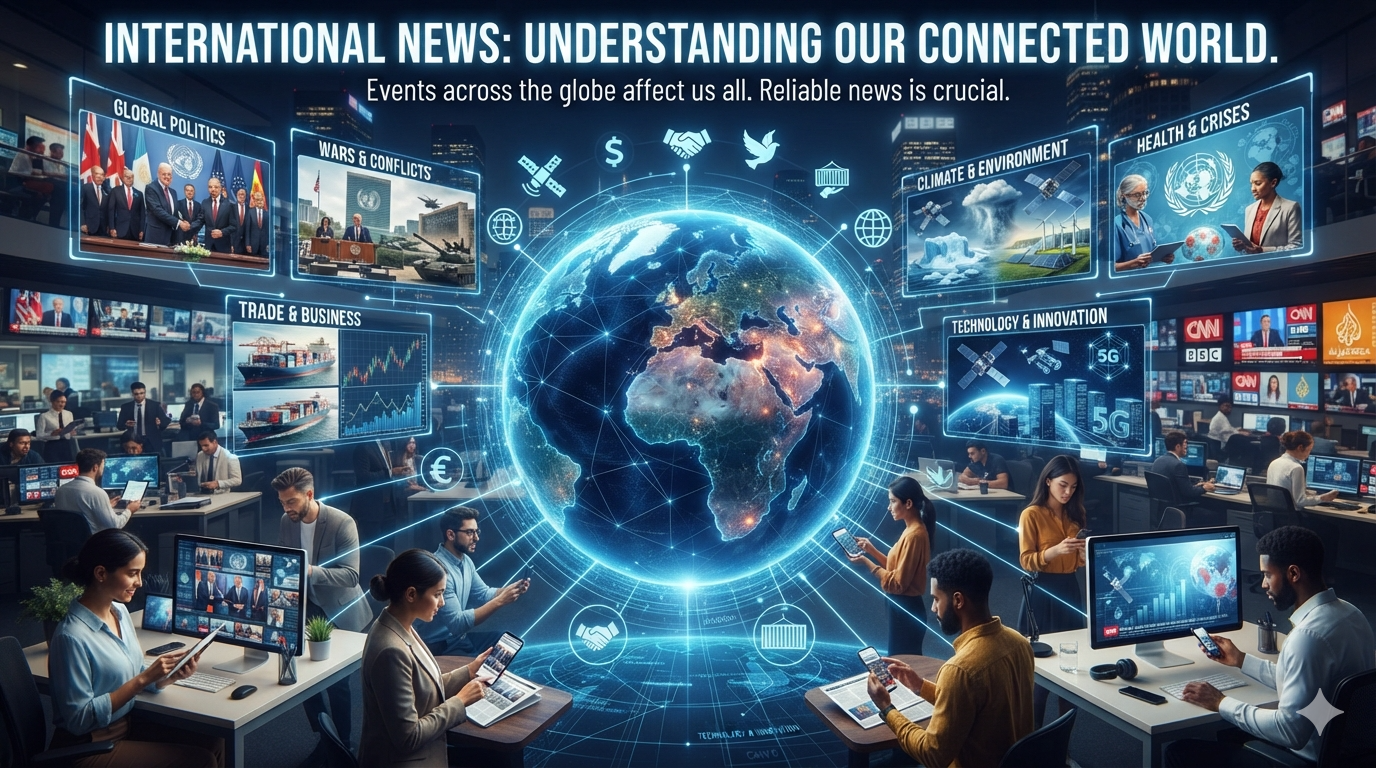
International news helps people understand what is happening beyond their own country. It covers major events, global politics, wars, trade, business, climate, technology, health, and international relations. In today’s connected world, an event in one country can affect people thousands of miles away. A change in oil prices can impact household costs. A new trade deal can create jobs. A conflict can affect travel, markets, and global security. This makes reliable world news more important than ever.
However, finding trustworthy information can be difficult. Social media often spreads headlines before facts are checked. Some stories may also lack important context. Good reporting explains what happened, who is involved, and why the event matters. It also separates confirmed facts from claims and opinions. This guide explains how to follow global events, check sources, understand major international issues, and make better sense of the news you read every day.
What Is International News?
International news refers to reports about important events happening across different countries and regions. It includes stories about governments, economies, conflicts, diplomacy, science, health, disasters, sports, and culture. The goal is to help readers understand events that may have effects outside their original location. A major election, for example, can influence foreign policy and international trade.
Quality international news also provides context. A short headline may tell you what happened, but it may not explain why it happened. Strong reporting gives background information and presents information from reliable sources. It can also explain different viewpoints when an issue is disputed. Readers should therefore look beyond headlines and check the full report. This simple habit can reduce confusion and help people understand complicated global stories.
Why International News Matters Today
The world is closely connected through trade, travel, technology, finance, and communication. Because of this connection, events in one region can quickly influence another. A major change in global energy markets can affect transportation costs. Political decisions can change investment plans. Natural disasters can disrupt supply chains and food markets. These examples show why global awareness matters.
Following international news can also help people understand changes in their daily lives. It gives readers a wider view of economic and political developments. Students can use it to improve their knowledge of world affairs. Businesses can watch international markets and regulations. Travelers can learn about changing conditions before visiting another country. The key is to follow credible reporting rather than relying on viral posts alone.
Major Categories Covered by International News
International reporting covers many subjects. Politics is one of the most common areas because government decisions can influence other countries. Diplomacy is also important because nations often work together through agreements and international organizations. Economic news covers inflation, interest rates, trade, investment, and financial markets.
Other major categories include armed conflicts, climate change, public health, technology, migration, and humanitarian issues. Science reporting can highlight discoveries that affect people around the world. Environmental reporting can explain extreme weather and long-term climate trends. The table below gives a simple overview of the main areas readers may see in global reporting.
| News Category | What It Covers | Why It Matters |
|---|---|---|
| Global Politics | Elections, leaders, policies, and government decisions | Can influence international relations |
| World Economy | Trade, inflation, markets, and growth | Affects businesses and consumers |
| Diplomacy | Treaties, talks, and international cooperation | Can reduce tensions and build partnerships |
| Conflicts | Wars, security issues, and peace efforts | Affects safety and regional stability |
| Climate | Weather events and environmental changes | Impacts communities and economies |
| Technology | AI, cybersecurity, science, and innovation | Changes work and daily life |
| Global Health | Diseases, research, and health policies | Helps countries respond to health risks |
| Migration | Refugees, borders, and population movement | Creates social and policy challenges |
| Humanitarian News | Aid, disasters, and vulnerable communities | Highlights urgent human needs |
| Culture | Arts, education, media, and social trends | Builds understanding between societies |
How Global Politics Shapes World Events
Global politics is a major part of international reporting. Countries often cooperate, compete, and negotiate over shared interests. These interests may include trade, security, natural resources, borders, and technology. Decisions made by major governments can influence other nations and international institutions.
Readers should remember that political stories often contain competing claims. One government may describe an event differently from another government. Good journalism compares available evidence and identifies statements as claims when they have not been independently confirmed. This approach gives readers a clearer picture. It also prevents a single political narrative from becoming the entire story. Understanding this difference is an important part of becoming a careful news reader.
The Role of International Relations
International relations describe how countries interact with one another. These relationships include diplomacy, trade agreements, security partnerships, negotiations, and international cooperation. They can change over time as governments respond to new challenges. A country may cooperate with another nation on trade while disagreeing on security matters.
International organizations also play an important role. Groups such as the United Nations help countries discuss shared problems. Other organizations focus on health, finance, trade, development, or regional cooperation. Their work often appears in global news because their decisions can affect many countries. When reading these stories, it helps to understand the organization involved and its actual role.
Understanding Breaking World News
Breaking news can develop very quickly. Early reports may contain incomplete information. Details can change as officials, witnesses, and journalists confirm new facts. This is especially common during natural disasters, conflicts, elections, and major emergencies.
Readers should avoid sharing dramatic claims before checking them. Look for reports from established news organizations and official sources. Check the publication time and see whether later updates have corrected earlier information. It is also useful to compare several reliable reports. If different sources agree on the basic facts, confidence in those facts becomes stronger. This simple process can help readers avoid misinformation.
How to Check If a News Story Is Reliable
Reliable reporting usually identifies its sources and explains where important information came from. It avoids presenting rumors as proven facts. It also distinguishes reporting from commentary. Readers should look for evidence, dates, named sources, and clear explanations.
Another useful step is checking the original source. If a report refers to a government statement, research paper, or official document, readers can examine that material when possible. Be careful with headlines that use extreme language. A headline may be designed to attract clicks rather than provide full context. Good news consumption requires curiosity, patience, and basic source-checking skills.
The Impact of Social Media on Global News
Social media has changed how people discover world events. A major story can reach millions of people within minutes. Videos and eyewitness posts can provide valuable information from places where journalists may not immediately be present. However, social media content can also be misleading.
Old photographs may be shared as new events. Edited videos can remove important context. Unverified claims can spread quickly because they are emotional or surprising. Readers should therefore treat viral content as a starting point, not automatic proof. Check when and where the material was created. Look for confirmation from trusted reporting or official sources before accepting it as fact.
International Business and Economic News
The global economy connects businesses and consumers across borders. International economic news often covers trade, currencies, energy prices, supply chains, interest rates, and investment. These subjects may sound complicated, but they can have simple effects on everyday life.
For example, changes in global energy prices can influence transportation and production costs. Supply problems can affect the price or availability of goods. New trade policies can change how companies import or export products. Following economic reporting can help readers understand these connections. It is important to remember that markets can change quickly, so financial stories should be read carefully and in context.
Climate and Environmental News
Climate and environmental reporting has become an important part of global coverage. Extreme heat, floods, storms, droughts, wildfires, and other events can affect communities across borders. Environmental stories also cover clean energy, conservation, pollution, water supplies, and climate policies.
Good climate reporting explains both immediate events and longer-term trends. It should use evidence from scientific research and credible institutions. Readers should be cautious about claims based on one unusual weather event. Climate science looks at patterns over longer periods. Understanding this difference makes environmental reporting easier to evaluate and helps readers avoid misleading conclusions.
Technology and Science Around the World
Technology has become another major part of international reporting. Artificial intelligence, space exploration, cybersecurity, biotechnology, and digital services can affect people in many countries. New technologies may create opportunities while also raising questions about privacy, jobs, safety, and regulation.
Science reporting requires careful attention to evidence. Early research findings do not always become proven conclusions. A study may have limitations, and later research may produce different results. Reliable science journalism explains these limits instead of making exaggerated claims. This approach helps readers understand innovation without creating unrealistic expectations.
International Health and Humanitarian Stories
Global health stories can involve disease outbreaks, medical research, vaccination programs, healthcare systems, and international health cooperation. Humanitarian reporting focuses on people affected by disasters, conflicts, displacement, poverty, and other crises.
These stories require responsible reporting. Numbers and claims should come from credible sources. Personal stories can help readers understand human experiences, but they should not replace wider evidence. Good reporting also avoids unnecessary sensationalism. It focuses on facts while treating affected people with dignity. This balance is especially important when covering vulnerable communities.
How to Read International News Without Feeling Overwhelmed
There can be hundreds of global stories every day. Trying to follow everything can quickly become exhausting. A better approach is to create a simple news routine. Start with a few trusted sources and check major developments once or twice daily.
Focus on stories that directly affect your interests, work, studies, or community. Read the full article when a topic is important. Do not feel pressured to understand every story immediately. Some global issues take months or years to develop. A calm and consistent approach can help you stay informed without constantly checking your phone.
Tips for Better Global News Reading
A few simple habits can improve the way you consume news. First, check the source before trusting a story. Second, look at the date because old stories are often reshared. Third, separate facts from opinions. Fourth, compare important claims with other reliable reports.
It is also useful to learn basic geography and history. Understanding a country’s location and past relationships can make current events much easier to understand. Finally, avoid judging complicated international issues from one headline. Read enough background information to understand the wider situation. Good news reading is not about knowing everything. It is about asking better questions and using trustworthy evidence.
Why Context Matters in International Reporting
Context can completely change how a news story is understood. A single event may have a long history behind it. Political decisions can result from years of negotiations. Economic changes may be linked to several different factors. A conflict may involve multiple groups with different goals.
This is why readers should value reporting that explains background information. Context helps people avoid simple conclusions about complicated events. It also makes it easier to recognize misleading posts that remove important details. When a story seems shocking, take a moment to ask what happened before the reported event. That question can lead to a much better understanding of global affairs.
Frequently Asked Questions
1. What does international news mean?
International news covers important events happening across countries and regions. It includes politics, diplomacy, business, conflicts, climate, health, technology, science, and humanitarian issues. Its purpose is to help readers understand events beyond their immediate communities and explain how those events may affect the wider world.
2. Why should people follow international news?
Following global news helps people understand major changes around the world. It can improve awareness of politics, business, technology, climate, and international relations. It can also help students, professionals, travelers, and businesses make better-informed decisions based on current events.
3. How can I identify reliable international news?
Look for established sources, named experts, clear evidence, publication dates, and transparent reporting. Compare major claims across multiple credible sources. Be careful with anonymous social media posts, sensational headlines, and stories that provide no evidence.
4. Is social media a reliable source of world news?
Social media can provide fast information, including eyewitness material. However, posts can be incomplete, old, edited, or false. Treat social media as a starting point and verify important claims through credible journalism or official sources.
5. What topics are usually included in international news?
Common topics include global politics, diplomacy, international business, conflicts, climate change, technology, science, health, migration, disasters, and humanitarian issues. Major cultural and sporting events may also receive international coverage.
6. How often should I check international news?
There is no single correct schedule. Checking trusted sources once or twice a day can be enough for many people. For major developing events, you may want more frequent updates. The goal is to stay informed without allowing constant news updates to become stressful or distracting.
Conclusion
International news gives us a wider view of the world and helps us understand how countries and communities are connected. Global events can influence economies, politics, technology, travel, climate, and everyday life. However, staying informed requires more than reading headlines. Readers should check sources, compare important claims, understand context, and recognize the difference between facts and opinions.
The best approach is simple. Choose trustworthy sources, read beyond the headline, and take time to understand complicated stories. Avoid sharing information before checking it. As global events continue to change, strong news habits can help you stay informed and thoughtful. Whether you are a student, professional, business owner, or casual reader, learning how to follow world events is a valuable skill. Stay curious, check the facts, and keep building a clearer understanding of the world around you.






Post Comment